
The Urgent Need for Innovative Learning in Modern Education
In today’s fast-paced educational landscape, traditional methods are rapidly becoming obsolete. Classrooms filled with passive lectures and rote memorization are no longer sufficient to prepare students for the complex, unpredictable world ahead. For a medical education coordinator, this urgency is even more palpable. Imagine a classroom where students struggle to synthesize data, make critical decisions, and solve real-world problems. The stakes are high, and every moment without transformative tools like robotics kits represents a lost opportunity to foster essential analytical skills. Robotics kits provide an immediate, hands-on solution, immersing students in environments where experimentation and critical reasoning are not just encouraged – they are required. The sensory experience of physically manipulating components, programming sequences, and observing real-time outcomes creates a learning environment that stimulates the mind in ways textbooks never can. This is a call to action for educators: the window to revolutionize learning is now, and robotics kits are the gateway to producing agile, inventive thinkers ready to thrive in any professional domain.
How Robotics Kits Engage Students Visually and Tactilely
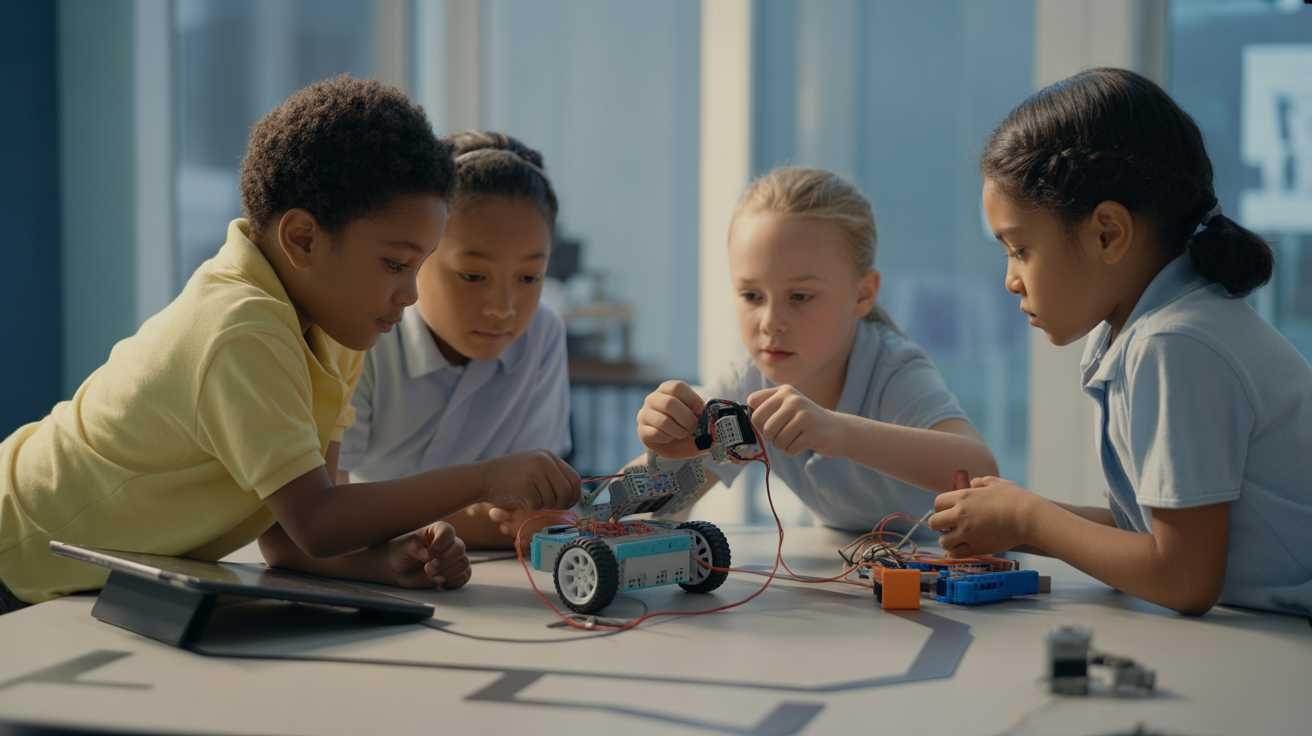
One of the most compelling reasons robotics kits are indispensable in teaching critical thinking is their multisensory approach. Students interact with vivid, tangible components that respond instantly to their commands, creating a visceral understanding of cause and effect. For a medical education coordinator, this hands-on engagement mirrors the tactile learning required in medical simulations, bridging the gap between theoretical knowledge and applied expertise. Picture a student assembling a robotic arm: each joint, motor, and sensor becomes a puzzle piece that demands precision, foresight, and analytical planning. The act of programming the arm to respond to sensor input transforms abstract coding concepts into dynamic, visualized outcomes. This sensory-rich environment enhances cognitive retention, fosters curiosity, and cultivates problem-solving instincts. By witnessing immediate feedback – successes, errors, and iterative adjustments – students develop resilience, learning to approach challenges systematically while sharpening analytical acuity. The urgency is clear: without these interactive experiences, students miss the opportunity to internalize complex systems thinking at a critical stage in their development.
Building Critical Thinking Through Iterative Problem Solving
Critical thinking is not a static skill; it is honed through iterative problem-solving, analysis, and reflection. Robotics kits create a structured yet flexible platform for students to engage in this continuous cognitive cycle. A medical education coordinator knows that in the medical field, practitioners must evaluate information swiftly, weigh alternatives, and make decisive interventions – skills that robotics-based learning cultivates from the outset. When students confront a malfunctioning robot or an unexpected coding error, they are compelled to diagnose the issue, hypothesize solutions, test interventions, and evaluate outcomes. This iterative loop mirrors real-world decision-making, training learners to anticipate consequences and adapt strategies effectively. Furthermore, the tangible nature of robotics ensures that these lessons are not abstract; each correction or improvement is a concrete manifestation of analytical reasoning. By embedding such rigorous problem-solving exercises into the curriculum, educators can instill a sense of urgency in students: mastery of these skills is not optional but essential for future professional success, particularly in high-stakes environments like medicine and technology.
Encouraging Analytical Thinking Through Data Interpretation
Robotics kits also offer a rich platform for developing analytical thinking through data interpretation and evidence-based decision-making. Each robotic experiment generates measurable outcomes, sensor feedback, and performance metrics that students must analyze. For a medical education coordinator, the parallels to clinical decision-making are striking. Just as medical professionals interpret patient data to make informed choices, students analyze robotic performance metrics to optimize design and function. This process enhances their ability to identify patterns, detect anomalies, and predict results – core competencies for any analytical thinker. The visual dashboards, coding logs, and mechanical feedback create a layered learning experience where theory meets quantifiable practice. Students learn to translate abstract numerical data into actionable insights, reinforcing both logical reasoning and creative problem-solving. The urgency cannot be overstated: in an era dominated by data-driven decisions, failing to cultivate analytical skills through interactive tools like robotics kits puts students at a tangible disadvantage in the workforce.
Real-World Applications and Career Readiness
The stakes of not integrating robotics into educational programs are increasingly evident. Students trained with robotics kits enter the workforce with a robust skill set directly transferable to high-demand careers. For a medical education coordinator, robotics-based learning is particularly relevant in fields such as biomedical engineering, medical robotics, and healthcare technology innovation. By working on simulations that mimic real-life scenarios – such as surgical robots or diagnostic automation – students gain experiential knowledge that textbooks alone cannot provide. This exposure develops both confidence and competence, ensuring graduates are not just familiar with theoretical principles but proficient in practical applications. The sensory engagement, iterative problem-solving, and analytical rigor of robotics kits provide a competitive edge, fostering a mindset of innovation and adaptability. The FOMO is real: institutions that delay implementing robotics kits risk producing graduates ill-equipped for the dynamic challenges of modern healthcare and technology sectors.
Enhancing Collaboration and Team-Based Problem Solving
Robotics education is rarely a solitary endeavor. Most projects demand collaboration, requiring students to divide roles, communicate complex ideas, and integrate diverse skill sets. For a medical education coordinator, this mirrors the collaborative environment of healthcare teams, where coordination, shared decision-making, and interdisciplinary communication are vital. Students must articulate their reasoning, negotiate design choices, and troubleshoot collectively, developing both leadership and empathy. The social and cognitive benefits are profound: exposure to team dynamics encourages the exchange of diverse perspectives, fostering critical evaluation and creative problem-solving. Sensory engagement – seeing how a peer’s programming adjustment changes the robot’s behavior, or how mechanical modifications affect movement – reinforces understanding in ways solitary study cannot. Urgency is amplified in this context: the sooner students experience collaborative robotics, the more prepared they are to navigate high-pressure professional environments, making these kits an indispensable educational tool.
Proven Success Through Verified Industry Data
Evidence supporting robotics kits as a catalyst for critical thinking is extensive and compelling. Studies published by reputable educational institutions demonstrate measurable improvements in analytical reasoning, problem-solving capabilities, and STEM engagement among students exposed to hands-on robotics programs. For a medical education coordinator, integrating these insights ensures decisions are data-driven and outcome-oriented. Licensing, verified curricula, and responsive customer support from reputable kit providers enhance credibility, ensuring educators invest in tools with proven efficacy. Students report heightened engagement, increased curiosity, and a newfound confidence in tackling complex challenges. Testimonials from schools and professional training programs highlight tangible outcomes: improved exam performance, elevated project success rates, and enhanced readiness for technology-driven careers. The urgency is unmistakable: institutions ignoring these validated benefits risk falling behind peers who adopt robotics-enhanced curricula and reap measurable educational advantages.
Transforming the Learning Experience Through Interactive Simulation
Robotics kits transform abstract concepts into interactive simulations, allowing students to experiment in lifelike scenarios without real-world risk. For a medical education coordinator, this is particularly valuable in teaching procedures or decision-making under pressure. Imagine students programming a robot to navigate a maze that simulates human anatomical pathways or designing automated diagnostic tools. The sensory-rich feedback, combined with iterative troubleshooting, cultivates a deep understanding of complex systems. Students experience the thrill of discovery, the tension of solving high-stakes challenges, and the satisfaction of seeing theoretical concepts come alive. This immersion accelerates learning, embeds critical thinking habits, and fosters adaptability. Every moment spent without this level of engagement represents lost potential, creating an urgent need for institutions to adopt robotics kits as an essential component of progressive education strategies.
Seizing the Opportunity: Why Immediate Action Matters
The window to revolutionize educational outcomes with robotics kits is fleeting. Institutions delaying implementation risk depriving students of transformative experiences that directly enhance critical thinking, analytical skills, and career readiness. For a medical education coordinator, the imperative is clear: act now to integrate robotics-based learning into curricula, ensuring students gain hands-on, data-driven, and collaborative skills essential for future success. Providers offer licensed, secure, and responsive solutions, verified through industry data and real-world case studies, eliminating the guesswork from procurement decisions. The combination of sensory engagement, iterative problem-solving, analytical skill-building, and collaborative learning makes robotics kits not just an educational tool but a necessity for 21st-century competency. The FOMO is real – every day without robotics-based programs is a day of missed innovation, engagement, and measurable academic growth. Take action immediately and secure the tools that will redefine the learning journey for your students.
If you want to foster creativity and logical thinking in students, exploring neil druckmann education can provide invaluable insights through engaging DIY projects.
To learn more about how hands-on projects can enhance skills for parenting education jobs, explore innovative methods that engage learners in coding, robotics, and engineering principles.
If you want to elevate your teaching methods, explore how Premier education consulting can help you implement hands-on projects that enhance learning in math, science, coding, robotics, and engineering.
This topic connects naturally with Strategies for Managing — exploring it will give you a more complete picture.
As you consider innovative educational methods, it’s also essential to stay ahead in the digital landscape; for instance, an effective automotive digital marketing strategy can significantly enhance your outreach and engagement with potential learners in today’s competitive environment.